
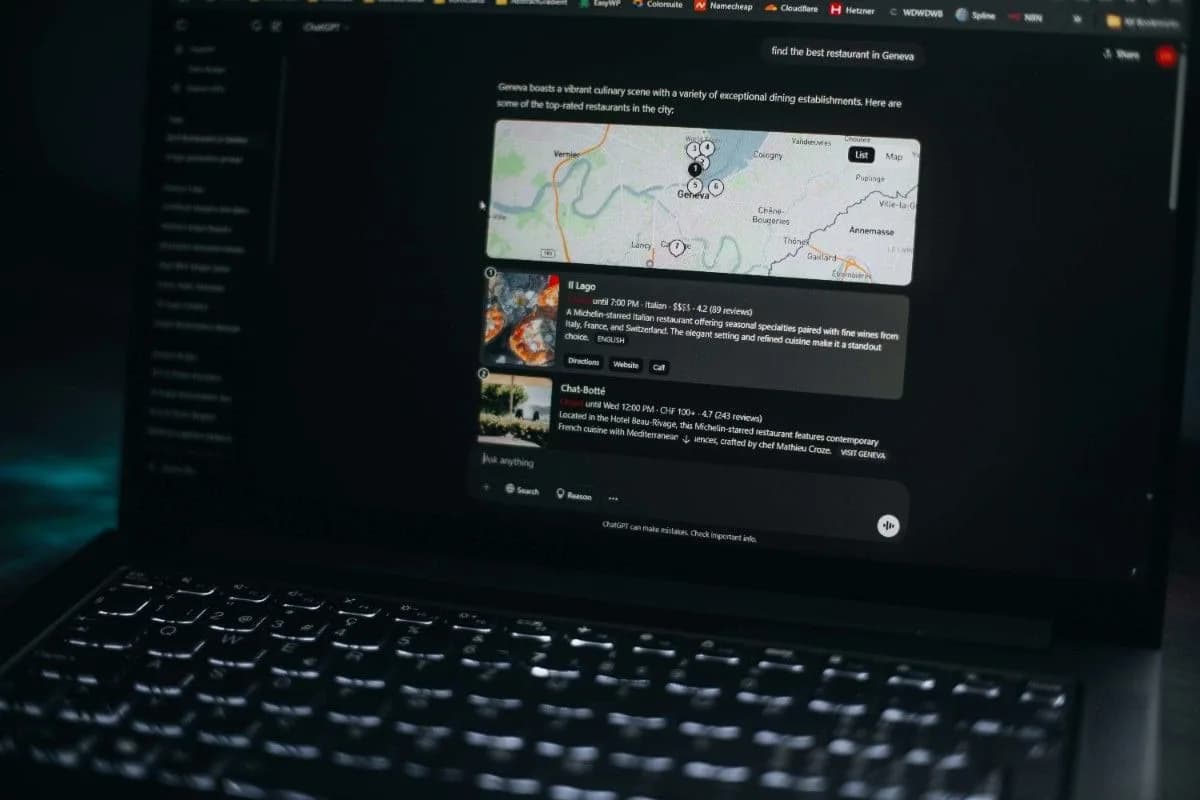

Let's be blunt: the way people find local businesses is changing faster than most business owners realize. If your entire strategy is "rank on Google page 1," you're playing a game whose rules are being rewritten in real time.
AI isn't coming for search. It's already here. Google's AI Overviews, ChatGPT, Bing Copilot, and voice assistants like Siri and Alexa are fundamentally changing how people discover, evaluate, and choose businesses.
This guide is built for Wisconsin small business owners who want to stay ahead without drowning in tech jargon. We'll cover what's actually changing, what still matters, and exactly what you need to do to make sure customers find you in 2026.
Quick Look: What You Need to Know
- Traditional SEO isn't dead. But it's no longer enough on its own. You need to be visible where AI pulls answers from.
- AI Overviews dominate Google. AI-generated summaries now appear above organic results for nearly half of searches.
- Voice search is mainstream. "Hey Google, find me a plumber near Racine" is how many customers search now.
- ChatGPT is a new search engine. Millions use it to research and compare local businesses.
- Your website must be AI-readable. Structured data, clear content, and E-E-A-T signals determine whether AI trusts your site.
The Three Channels: Where AI Meets Search
In 2026, customers find businesses through three distinct AI-powered channels. You need to be visible in all three.
Channel 1: Google AI Overviews
When someone Googles "best roofing company in Kenosha," Google's AI now generates a comprehensive answer at the top of the results page. This AI Overview pulls from multiple sources to synthesize a recommendation. If your website isn't one of those sources, you're invisible for that search.
The key to appearing in AI Overviews: Be the most authoritative, specific, and well-structured source on your topic in your area. Generic "we offer great service" content won't cut it.
Channel 2: AI Assistants (ChatGPT, Copilot, Gemini)
More people are using AI chatbots to research businesses. A potential customer might type into ChatGPT: "What should I look for in a web designer in Milwaukee?" or "Compare plumbing companies near me." These AI assistants pull from their training data and real-time web access to generate recommendations.
Businesses with strong online presence, clear service descriptions, and positive reviews are the ones these tools recommend.
Channel 3: Voice Search
"Hey Siri, find a dentist near me." Voice search is conversational, question-based, and hyper-local. Voice assistants pull from Google Business Profiles, featured snippets, and structured data. If your website isn't optimized for these, voice search will skip you.
What Still Works: The SEO Foundation
Before we talk about what's new, let's be clear: the fundamentals of good SEO still matter enormously. AI doesn't replace them, it builds on top of them.
- Google Business Profile: Still the #1 factor for local search visibility. Keep it complete, accurate, and active.
- Reviews: Both quantity and quality matter. AI uses review sentiment to evaluate businesses.
- Site speed: Core Web Vitals are a ranking factor. A slow site hurts you in traditional and AI search.
- Mobile-first design: Over 60% of local searches happen on phones. If your site isn't mobile-optimized, you're losing.
- Quality backlinks: Links from reputable local sources still signal authority to both Google and AI.
Andrew's InsightI tell every partner the same thing: if your Google Business Profile isn't fully optimized, nothing else matters yet. It's the single highest-ROI activity for any local business. Do that first, then build from there.
What's New: The AI Optimization Layer
Here's what you need to add on top of traditional SEO to be visible in the AI era:
1. Structured Data (Schema Markup)
Schema markup is code that tells AI exactly what your business does. It's the difference between AI guessing about your business and AI knowing about your business. Essential schemas: LocalBusiness, Service, FAQ, Review, and BreadcrumbList.
2. E-E-A-T Content Strategy
E-E-A-T (Experience, Expertise, Authoritativeness, Trustworthiness) is Google's quality framework. AI preferentially cites content that demonstrates real expertise. Write from personal experience, include your credentials, use real case studies, and be specific to your service area.
3. FAQ-Style Content Architecture
AI loves direct answers. Structure your key pages with clear questions and direct answers. Think about every question customers ask you on the phone and answer it on your website.
4. Consistent NAP + Citations
Your business name, address, and phone number (NAP) must be identical everywhere: website, Google Business Profile, Yelp, Facebook, and industry directories. Inconsistencies confuse AI and hurt your visibility.
Owner Tip (15 Minutes)
Here's a quick exercise to see how AI currently perceives your business:
- 1Open ChatGPT (free version works) and ask: "What are the best [your service] companies in [your city]?"
- 2Check if your business is mentioned. If not, check who is and study what they're doing differently.
- 3Google a question your customers ask you regularly. Look at the AI Overview. Is your content cited?
- 4Check your Google Business Profile completeness. Fill in every single field.
The 2026 Action Plan
Here's the prioritized checklist, from most impactful to least:
- Optimize your Google Business Profile (highest ROI, do this first)
- Implement Schema markup on your website (LocalBusiness, Service, FAQ)
- Create E-E-A-T content about your services in your specific area
- Build FAQ sections on your key service pages
- Ensure your site is fast and mobile-first (Core Web Vitals)
- Get more reviews and respond to every single one
- Maintain consistent citations across all directories
How Fourth Coast Web Builds for the AI Era
At Fourth Coast Web, every site we build includes full Schema markup suites, E-E-A-T-optimized content architecture, and perfect Core Web Vitals scores. We don't just build websites that look good — we build websites that AI trusts and recommends.
Our proprietary Crest performance framework ensures your site loads in under 2 seconds and is structured for both traditional search engines and the new wave of AI-powered discovery. Read our AI Visibility Guide for a deeper dive into specific optimization tactics.
Request your free AI Visibility Audit to see exactly how your business shows up in AI search.